A note before we start
We are a drying crew. We are not agents, adjusters or lawyers, and every policy is written differently. What follows is a general description of how many standard homeowners policies handle water. Your policy, your declarations page and your agent decide what applies to you.
We write about it because insurance questions come up on almost every call. People worry that the wrong first step will cost them the claim, and sometimes it does. A few plain habits make the process smoother.
The usual dividing line: sudden or slow
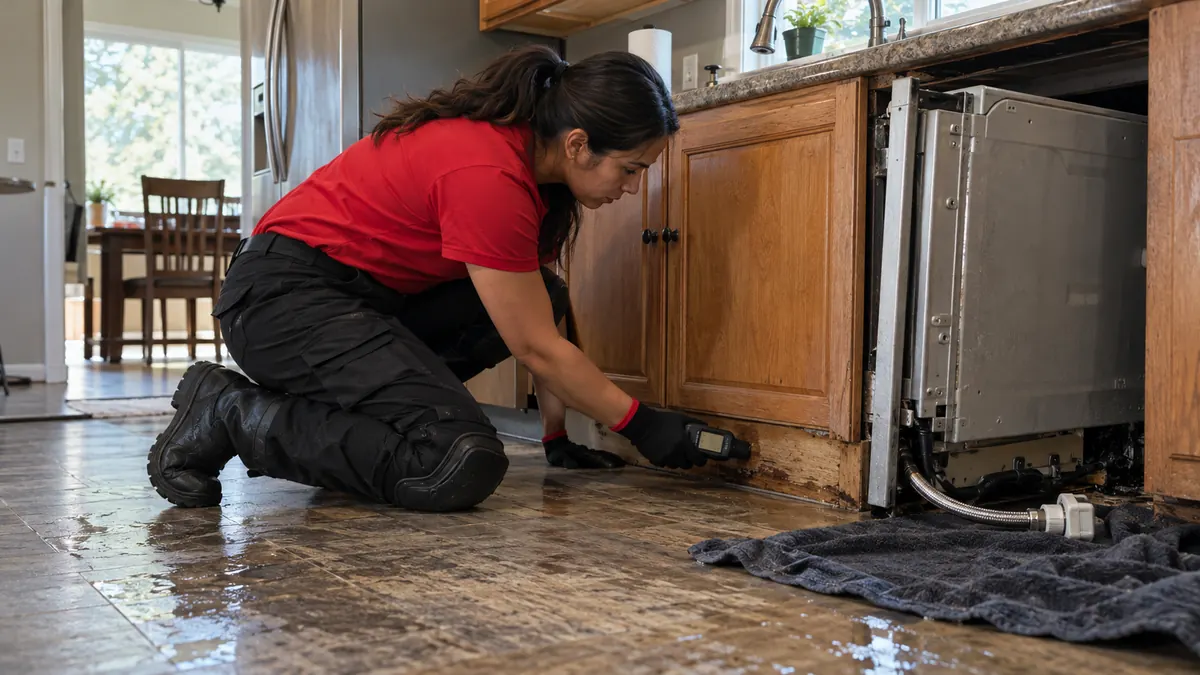
Many policies cover water damage that is sudden and accidental. A supply line bursts, a water heater fails, a dishwasher hose lets go, or a pipe splits during a freeze. These are the typical covered events, and the policy usually pays for the resulting damage, even if it does not pay to fix the pipe itself.
Slow damage is treated differently. A leak that dripped for months, a pipe that corroded for years, or a seal that failed slowly is often considered a maintenance issue. The wording varies, but the question is often how long the water was there. That is why documentation and timing matter.
Groundwater and flood are usually separate
Most standard homeowners policies exclude surface flooding and groundwater. That means a basement that floods because clay soil is saturated, or storm water that crosses a yard and goes through a door, is typically not covered unless you have a separate flood policy. Some policies offer an endorsement for water backup, including sewer and sump pump failure.
People are often surprised by this, especially in a clay area like ours. Look at your declarations page for words like water backup, sump overflow and flood. If you are unsure, ask your agent before the next rainy season, not after.
What to do in the first hours
Stop the water if you safely can. Take photos and videos of every wet room, the source if visible, and the damaged belongings before anything is moved. Keep receipts for what you spend, including emergency work. Call your insurance company or your agent to report the loss and ask what they require.
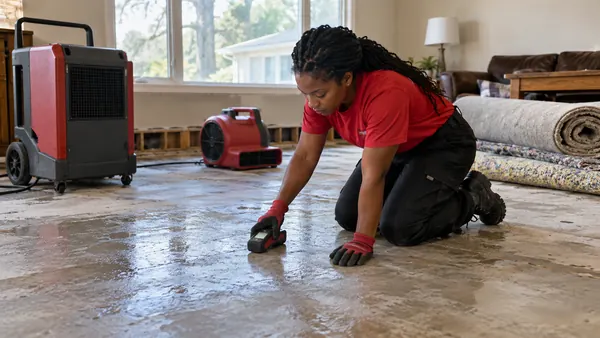
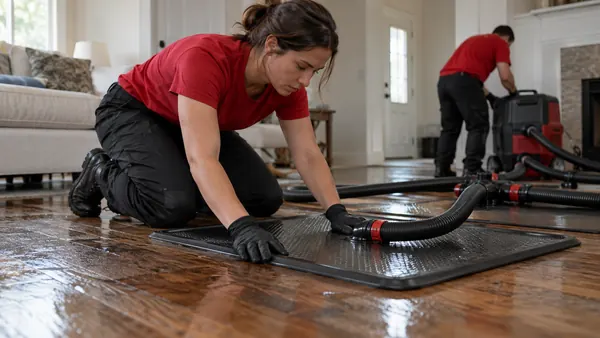
Do not throw away damaged materials until your adjuster has seen them or you have clear photos and agreement. At the same time, do not let wet materials sit if that will cause more damage. Policies generally expect you to protect the property from further loss. That is why photos first, then drying.
What documentation helps
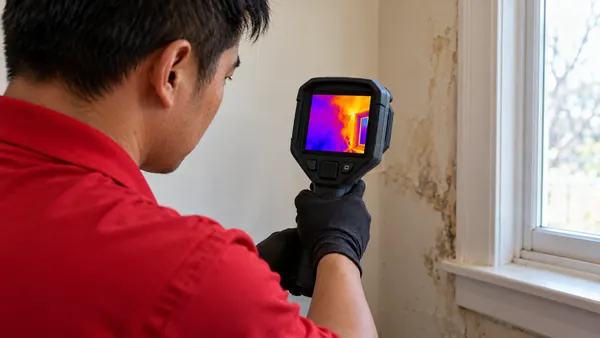
A claim file is a story told with evidence. Photos show what happened. A moisture map shows how far it went. Daily moisture readings show that drying worked and when it finished. A written scope shows what was removed and why.
That is what we provide. On every job we log readings on walls, floors and framing, photograph the affected areas and write a scope. The adjuster may disagree with us about what is covered, but they will not have to ask what was done.
What your adjuster will probably ask
Expect a short list of questions. When did you first notice the water, and what do you think caused it? Was the leak sudden, or had you seen stains before? When was the plumbing or the roof last repaired? What have you done since? Honest, specific answers help. A guess dressed up as a fact does not.
Adjusters also look at the age and condition of the materials. A twenty-year-old water heater that failed is a different story from a new one. If you have maintenance records, receipts or inspection reports, keep them where you can find them. A folder with the dates in it is worth more than a good memory.
Mistakes we see most
Waiting for the adjuster before starting to dry is the most costly. Adjusters are busy, and water does not wait. Painting over stains before the adjuster looks is the next. Replacing a flooring section without documenting the damage first is a close third.
The other common one is assuming. Homeowners assume the policy covers it and it does not, or assume it does not and never file. A phone call to your agent takes ten minutes. Make it early.
Quick answers
Does homeowners insurance cover a burst pipe?
Sudden bursts are commonly covered for the resulting damage. The pipe repair itself often is not. Check your policy.
Does it cover basement flooding from groundwater?
Often not. Flood and groundwater are commonly excluded unless you have a separate policy or endorsement.
Should I wait for the adjuster to start drying?
No. Policies generally expect you to protect the property from further damage. Take photos first, then start drying.
Will you talk to my adjuster?
We give you the records the adjuster will ask for, including photos, logs and a scope. You deal with your carrier.