When a treatment makes sense
Not every wet floor needs it. It is worth asking about when:
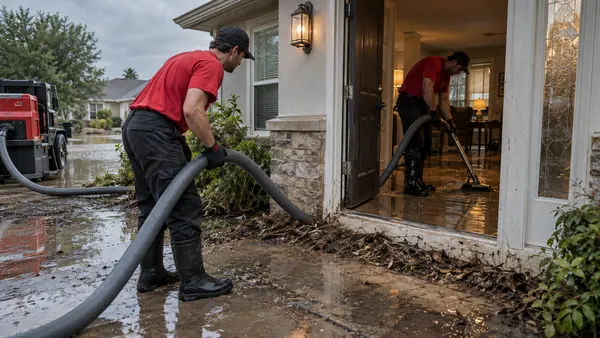
- The water came from outside, a storm drain or a creek
- A drain backed up, even if the water looked clear
- Drywall or insulation sat wet for more than a day
- The house smells musty a few days after cleanup
- Wall cavities or the subfloor stayed damp
- Standing water mixed with dirt, silt or oil
Cleaning first, then treating
An antimicrobial only works on a clean surface. If the silt is still on the stud, the treatment sits on the dirt instead of the wood. So the sequence matters: remove the wet materials, scrape and wash the surfaces, then apply the product, then dry.
We use EPA-registered products, apply them at label rates and respect the dwell time. We do not fog a house in the hope it will solve a wet wall. If the framing is still damp, drying is the answer, and the product supports it.
How antimicrobial treatment differs from sewage disinfection
After a sewage loss, we disinfect everything the waste touched, using a hospital-grade product, and remove porous materials. After a flood or a clean leak, antimicrobial treatment is a protective step on cleaned surfaces to slow growth while the structure dries.
The products and dwell times differ, and so does the reason. One kills contamination from waste. The other helps keep damp materials from growing mold.
Why floodwater leaves a bigger mess in this area
Storm runoff in this part of Georgia crosses lawns, driveways and streets before it reaches your door. It carries soil, fertilizer, pet waste and whatever was on the pavement. The red clay silt it leaves behind is fine and sticky, and it sticks to concrete and wood grain.
Warm weather works against you. In the summer, a house that has been wet for 24 to 48 hours can start growing mold on drywall paper and wood, while in cooler months the problem comes more slowly but lasts longer. Treating the surfaces after cleaning buys time while the structure dries.
What a treatment visit includes
Walk the areas
We check which surfaces were wet, what is porous and what can be cleaned.
Remove wet materials
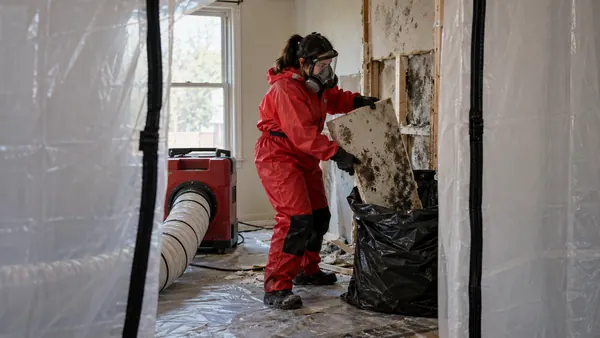
Soaked drywall, insulation and carpet pad are cut out and bagged.
Clean the surface
Silt, mud and residue are washed or vacuumed off studs, plates, slabs and subfloor.
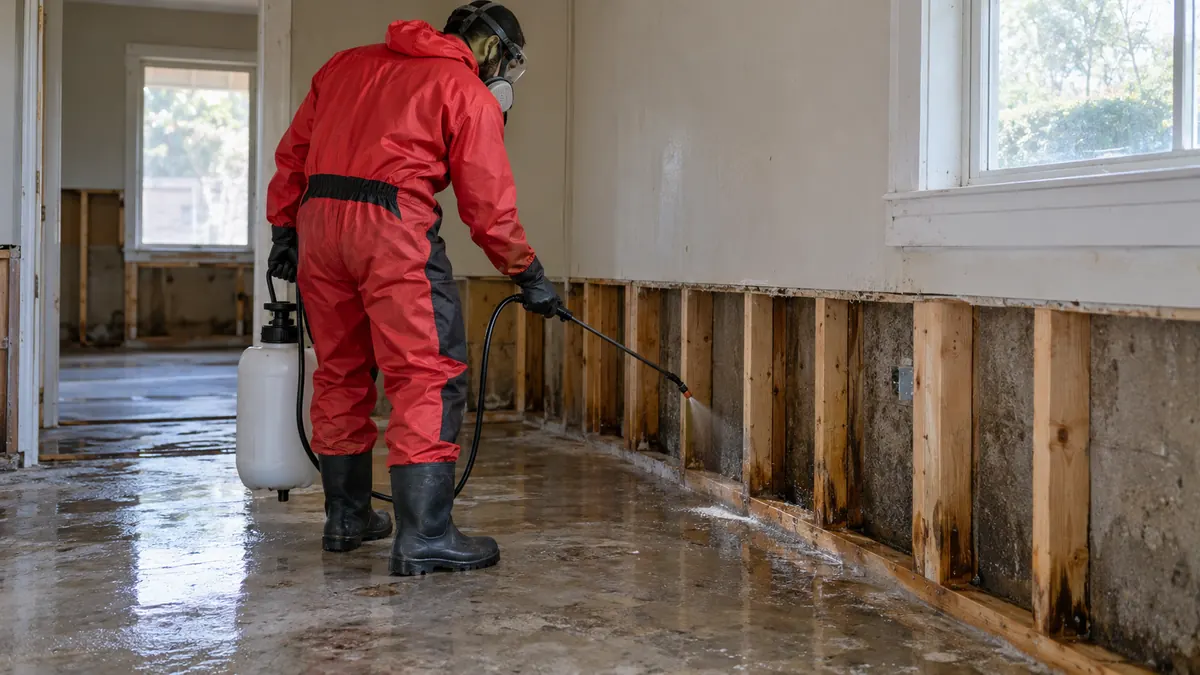
Apply the product
A label-directed antimicrobial is applied by sprayer to cleaned surfaces. Crew members wear protective gear.
Dry the space
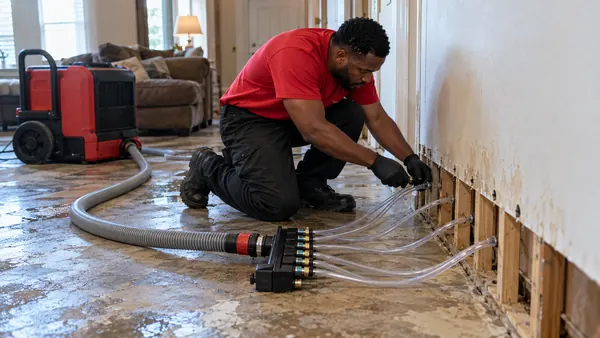
Dehumidifiers and air movers run so the treated surfaces are not left damp.
Record what we did
We note the product, the areas and the dwell time for your files and your adjuster.
What to expect after treatment
A treated area is not left wet. Dehumidifiers and air movers keep running, and we check the readings. You may notice a mild odor for a short time, which fades with ventilation and drying.
Keep children and pets out for the label period, and do not paint or seal until we sign off. If a musty smell returns after a few days, call. That usually means a cavity is still wet.
Before we arrive
- Keep children and pets out of the treated area for the label time
- Open no windows if humid air is moving in, unless we say so
- Move belongings out of the work area
- Tell us about any allergies or breathing conditions in the house
- Hold off on repainting or sealing until we sign off
What goes wrong without treatment
- Growth on studs a week after a flood cut
- A lingering odor in a basement that looked dry
- Rebuilding over damp framing
- Silt left in cavities that keeps the wood wet
Antimicrobial treatment cost
A typical estimate for antimicrobial treatment after a flood runs about $300 to $2,500, depending on the area. It is often part of a larger flood or sewage job. These are typical estimates, not guaranteed prices. Call for an exact quote. See all price ranges.
Questions we hear about this
Is the product safe for my family?
We use EPA-registered products and follow the label for dwell time, ventilation and re-entry. Pets and children stay out until it is safe.
Does it replace drying?
No. It supports drying. A treated wall that stays wet will grow something again.
How long until I can rebuild?
When readings show the framing and slab are dry, and the area has been cleaned and treated. We sign off in writing.
Can I do this myself?
Household bleach does not treat a wall cavity, and mixing products can be dangerous. We recommend leaving it to a crew.
Is this the same as mold remediation?
No. Remediation removes existing growth under containment. Treatment is a protective step after water damage, when growth has not yet taken hold.
Where we see this most
- Alpharetta, GAWalk-out basements with custom finishes where a missed damp wall is expensive.
- North Druid Hills, GAHillside basements hit by fast runoff and clay silt.
- Chamblee, GACompacted urban fill and creek-bottom lots where water lingers.