Why a few cold nights do so much damage here
Most houses across north Georgia were built for a mild climate. Supply lines run through attics, exterior walls, garages and vented crawl spaces, usually with little or no insulation. In an ordinary winter that is fine. When the temperature drops into the teens and stays there overnight, every unprotected line is at risk.
A pipe does not burst because water turns to ice. It splits when ice blocks the line and pressure builds between the ice and a closed faucet. The crack can be upstream from the frozen spot, so a pipe often looks intact until the thaw. Then water pours out through a split that has been open for hours, and the house is wet before anyone is awake.
Warning signs a pipe has frozen or split
Catch it early and the cleanup is smaller. On a freezing morning, watch for these:
- A faucet that runs a trickle or nothing at all
- Frost or ice on exposed pipes in the attic, garage or crawl space
- Drywall that bulges, stains brown or feels cold and wet
- The sound of running water when every fixture is off
- A ceiling stain that grows below an attic run
- A water meter that jumps when nobody is home
Where pipes freeze in Georgia houses
The failures cluster in a few places. Attic lines feeding upstairs baths freeze under thin insulation, and the water comes down through ceilings. Pipes in exterior walls, especially on the north side and behind kitchen sinks, freeze when cold air leaks around them. Garage and utility-room lines freeze in houses where the garage is unheated, and vented crawl spaces expose lines to wind through the vents.
Newer houses are not immune. Big windows, vaulted ceilings and lines that run along exterior walls to reach a kitchen island or a bar sink create cold spots. Older houses fail in other ways, with long runs of aging copper or galvanized pipe that have little give left.
How a freeze job runs
Stop the water
The main shutoff is closed. If the line is not yet repaired, we help you reach a plumber the same hour when possible.
Check safety
We look for live electrical in wet areas, sagging ceilings and slick floors, and shut off power to wet circuits if needed.
Extract
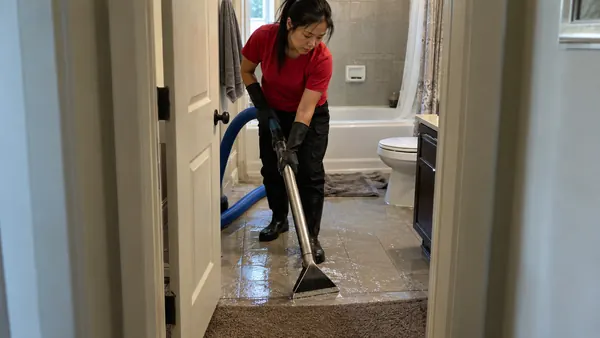
Pumps and wand extractors clear standing water from floors, basements and crawl spaces. Wet carpet pad and loose insulation are removed.
Open the wet areas
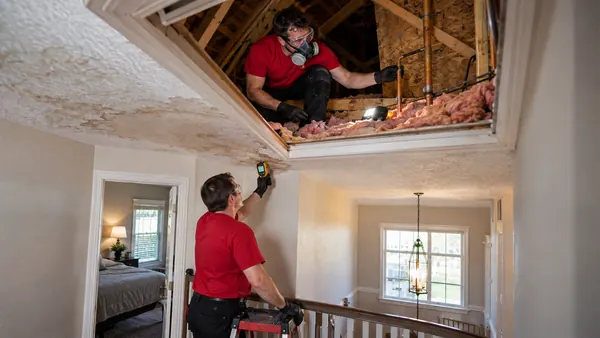
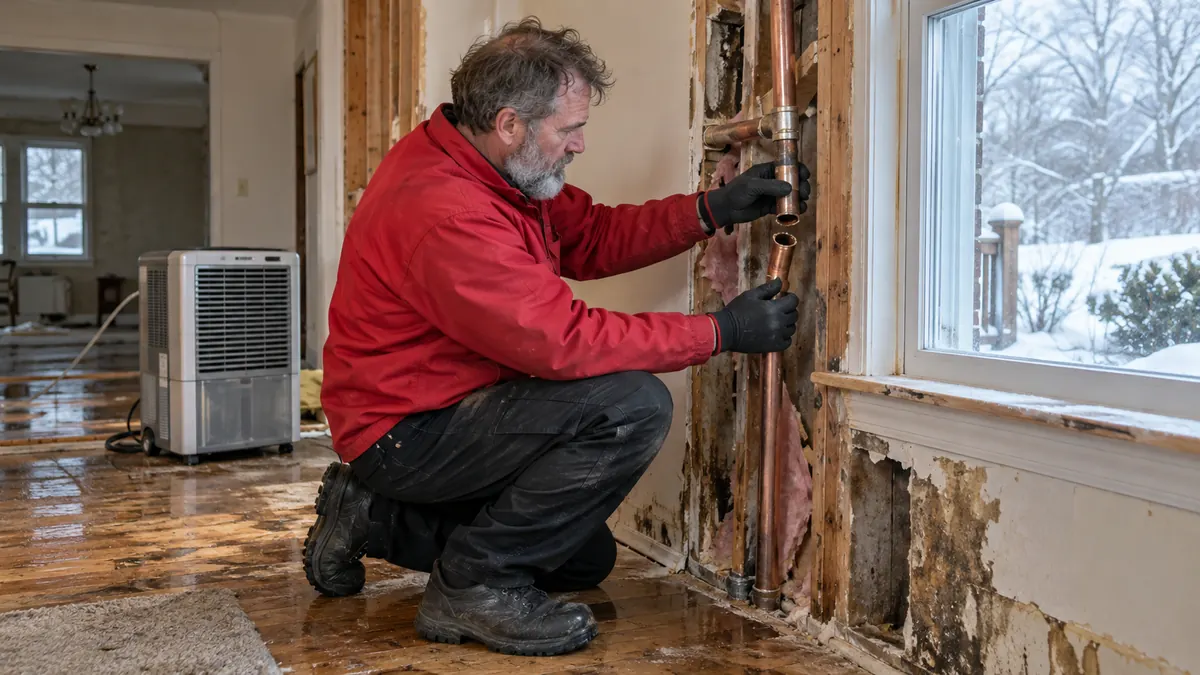
Ceiling sections that sag are cut, and wall cavities where the pipe ran are opened so wet insulation can come out.
Dry in cold weather
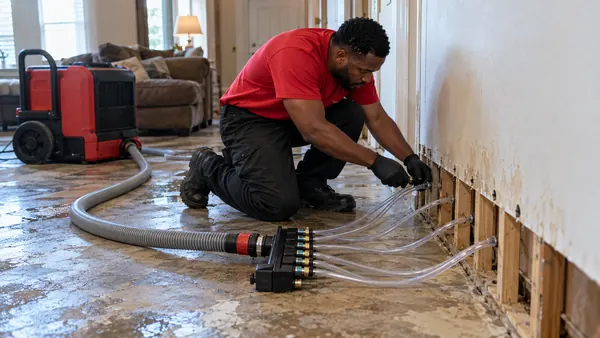
Heated air, dehumidifiers and air movers run together, since cold air holds little moisture and slows drying.
Read and report
We take moisture readings each day and send photos and logs to you, your landlord or manager and your adjuster.
Thaw day: what actually happens
People are often more surprised by the thaw than by the freeze. As temperatures rise, ice melts and water flows through the split. A crack the width of a hair can release gallons an hour, and a larger split can empty a tank-sized volume into a ceiling in minutes.
If you suspect a freeze, shut off the main valve before the thaw rather than after. Open faucets so water has somewhere to go, and check ceilings, wall bases and the crawl space for a few minutes after the water is turned back on. Do not raise the heat all at once. A gradual thaw puts less stress on lines that are already cracked.
What we usually find after a freeze
- Several lines split at once, in the attic and the walls below
- Insulation soaked inside an exterior wall behind clean-looking drywall
- A ceiling that filled with water under an attic break
- Water that kept running because the main stayed open
- A second leak at a fitting that only shows after the first repair
If a pipe has split right now
- Shut off the main water valve
- Turn off power to the wet area at the breaker only if you can reach it dry
- Open faucets and let the line drain
- Move belongings, rugs and electronics out of the water
- Photograph everything before it is moved
- Call a plumber for the repair and a drying crew for the water
Winter documentation that helps the claim
Freeze losses are common claims, and the paperwork matters. Take photos of the split pipe, the ice if any remains and every wet room before anything is moved. Write down the date, the outdoor temperature and the time you found the water.
We add the part that is hard to do yourself: moisture readings by room, a map of how far the water traveled and daily logs that show the structure drying. That record helps your adjuster see what happened and how it was handled. If the house was empty, it also helps show when the loss started.
- Photos before cleanup, including the pipe
- Moisture readings and a map of the wet areas
- Daily drying logs with equipment counts
- A written scope of what was removed and why
Frozen and burst pipe cleanup cost
These are typical estimates for the metro Atlanta area, not guaranteed prices. Plumbing repair and rebuilding are separate. Floors affected, how long the water ran and whether the house was empty move the number. Call for an exact quote.
| Job type | Typical estimate |
|---|---|
| One wall or one room, caught within hours | $1,200 – $3,500 |
| Attic burst through ceiling into one floor | $2,000 – $5,500 |
| Attic burst through two or more floors | $4,500 – $9,000 |
| Crawl space water, pumping and drying | $1,500 – $5,000 |
| Vacant home where water ran for days | $3,000 – $15,000+ |
| Wall cavity drying to save finishes | $800 – $4,000 |
Questions we hear about this
How cold does it have to get for pipes to freeze?
Unprotected pipes in unheated spaces can freeze after several hours around 20 degrees Fahrenheit or lower. Wind, thin insulation and exterior walls make it happen sooner.
Should I leave a faucet dripping?
A slow drip on an exterior-wall line helps keep water moving. It is not a guarantee, and it does not help if the line is already blocked.
The pipe has not burst. Is it okay?
A frozen pipe can be cracked without leaking until it thaws. Shut off the water, thaw it slowly and have a plumber check it.
Does insurance cover a burst pipe?
Sudden bursts are often covered for the resulting damage, not the pipe itself. Some policies have rules for vacant homes. Check yours and call your agent.
Can you start before the plumber finishes?
Yes. If the water is shut off, we can start extracting while the plumber repairs. We tell them which areas are wet.
How long does it take to dry?
Most freeze losses need three to seven days of equipment, depending on how many floors the water reached and how cold the house is.
Do you serve my area?
We cover Peachtree Corners and 15 nearby cities. The list on this page shows what we see in each one.
Where we see this most
- Norcross, GAUnheated garages and additions behind older split-levels, and old water lines in downtown buildings.
- Duluth, GATall two-story houses with long attic runs, and lines in vented crawl spaces under the ducts.
- Lilburn, GASlab ranches with lines in attics and water heater closets on exterior walls.
- Suwanee, GANewer houses with lines along big windows, and empty homes during listings.
- Doraville, GALow crawl spaces where lines sit just under the floor and catch wind through the vents.
- Chamblee, GABungalows with plumbing under the house, and townhomes with lines on exterior walls.
- Tucker, GASplit-foyer garage-level plumbing and basement bathroom lines on outside walls.
- North Druid Hills, GAHillside homes with exposed lines on windy uphill walls and drafty window wells.
- North Decatur, GAOlder houses with bare pipes under porches and in crawl spaces.
- Alpharetta, GALarge homes with attic runs for upstairs baths and exposed irrigation connections.
- Roswell, GAHillside crawl spaces open to wind and older plumbing in historic homes.
- Sandy Springs, GARebuilds with lines in unfinished spaces, and condos where one burst reaches several units.
- Dunwoody, GAMulti-level attics and condo stacks near the business district.
- North Atlanta, GABig homes with long pipe runs, often empty during winter travel.
- Mountain Park, GASeasonal and lake homes left empty on windy hillsides.