
Who we are
A crew that knows what clay does to a house
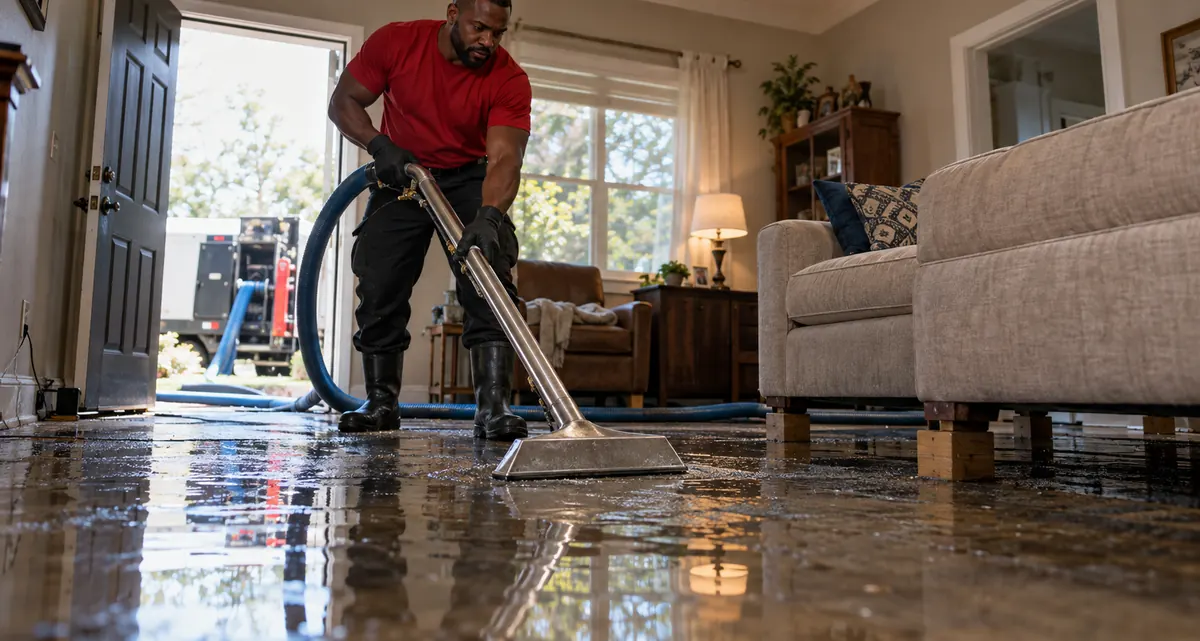
Corners Dryout & Restoration is based in Peachtree Corners, with more than 19 years of experience behind the crew. We work on the part that comes after the plumber stops the leak, or while the plumber is still on the way: getting the water out, drying the building and keeping a record you can hand to an adjuster.
Most of our calls start with the ground, not the pipes. Red clay holds rain against foundations, hills send water to the low lots and humid summers keep wood damp. Once you know how water gets into a house here, the work makes sense. We pump, dry, check and report, in that order.
- 19+ years experience
- Basements, crawl spaces and attics
- Moisture readings every visit
- Written records for insurance
- Emergency line open 24/7
Services
Water damage and mold services in Peachtree Corners
Pick the one that matches your problem. If you are not sure, call and describe what you see. We will point you to the right one.
Hydrostatic Clay-Bowl Water Extraction
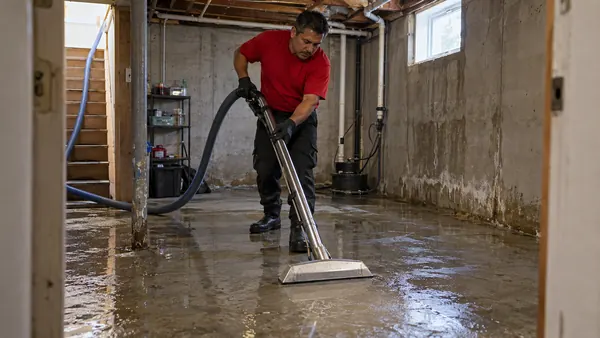
Groundwater forced through foundation cracks and cove joints after days of rain gets pumped out, then the slab, walls and framing are dried to readings.
Slab Leak Structural Dry-Out
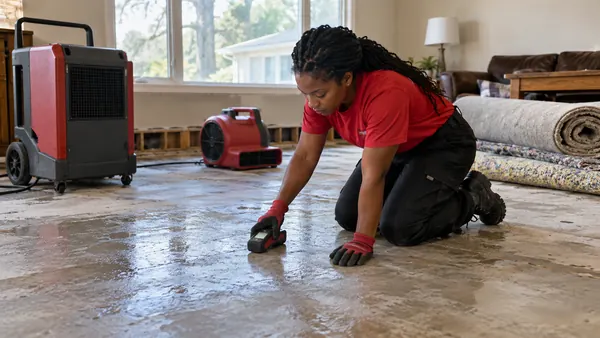
A supply pipe broke beneath the concrete and water crept under floors and up wall plates. We map the spread and dry every soaked material.
Sump Pump Failure Flood Cleanup
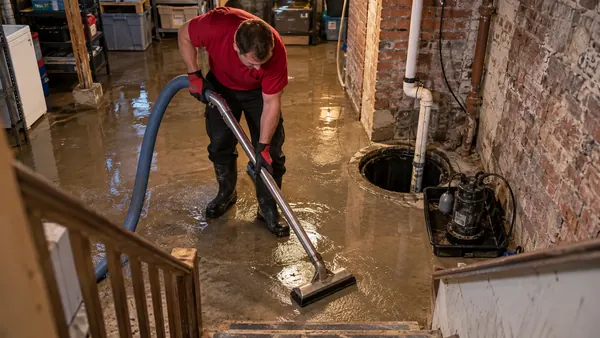
Storms, power cuts and stuck floats stop sump pumps when the basement needs them most. We extract, sanitize and dry the flooded lower level.
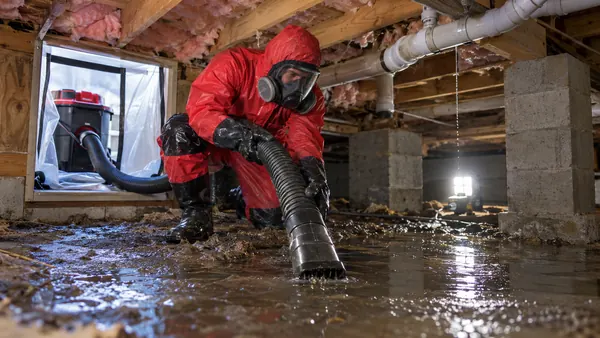
Crawl Space Sewage & Category 3 Decontamination
Sewer line breaks and municipal backups send category 3 water under the house. We remove, decontaminate and sanitize the crawl space in full gear.
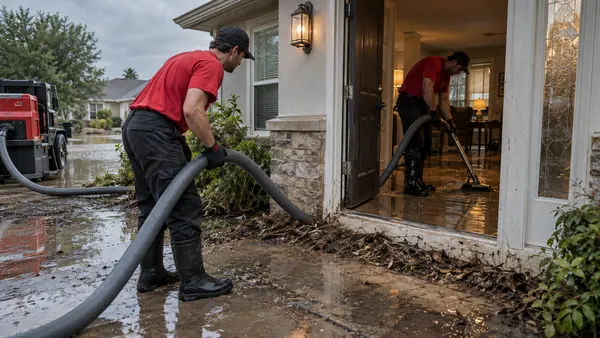
Low-Elevation Flash Flood Mitigation
Heavy runoff from higher lots and creeks pushes muddy water over thresholds. Crews pump, clear silt and dry floors and walls in low properties.
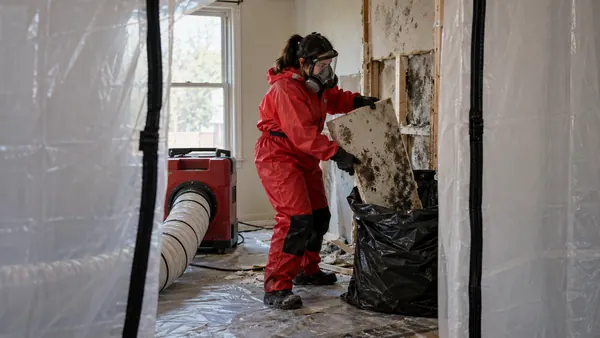
High-Humidity Structural Mold Remediation
Georgia humidity and hidden leaks feed mold inside walls and ceilings. We contain the area, filter the air, remove growth and dry the structure.
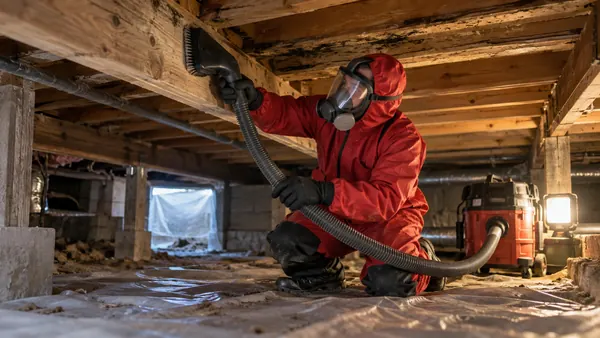
Crawl Space Mold Remediation & Framing Sanitation
Damp clay and open vents leave joists and subfloor coated in growth. We clean the framing, dry the wood and report on the moisture source.
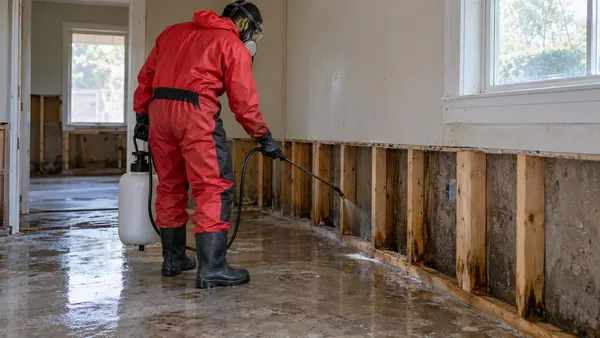
Post-Flood Antimicrobial Treatment
After floodwater leaves, bacteria and spores stay in framing, concrete and subfloor. We apply label-directed antimicrobials to clean surfaces and then dry them.
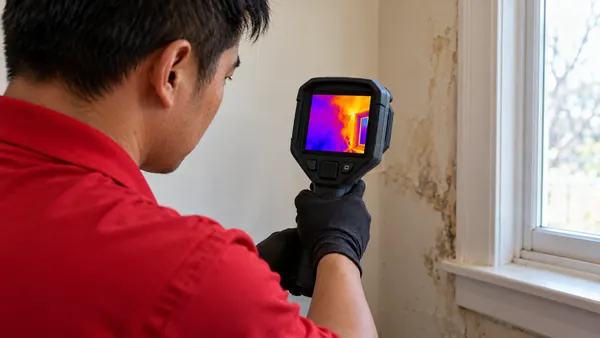
Thermal Imaging & Hidden Moisture Mapping
Infrared scans and moisture meters trace hidden water behind insulation, drywall and flooring without cutting first, so repairs target the actual wet area.
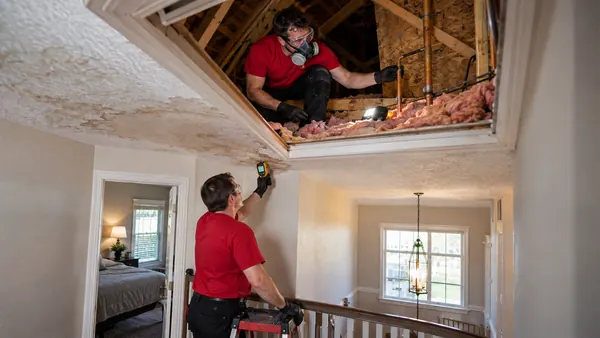
Attic Pipe Burst Multi-Floor Dry-Out
A pipe that bursts in the attic sends water through insulation, ceilings and walls into every floor beneath. We trace it and dry each level.
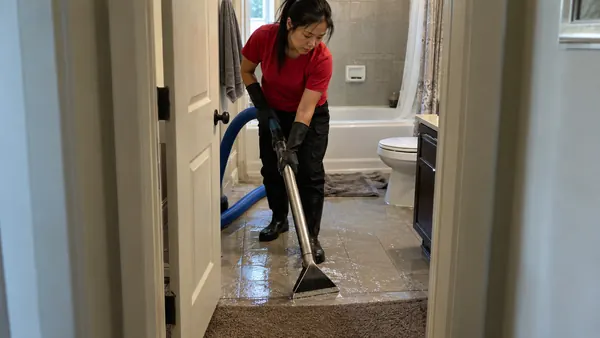
Vacant Property Freeze Damage Restoration
Empty houses, rentals between tenants and holiday homes can run a split line for days. We extract, open walls and dry the soaked structure.
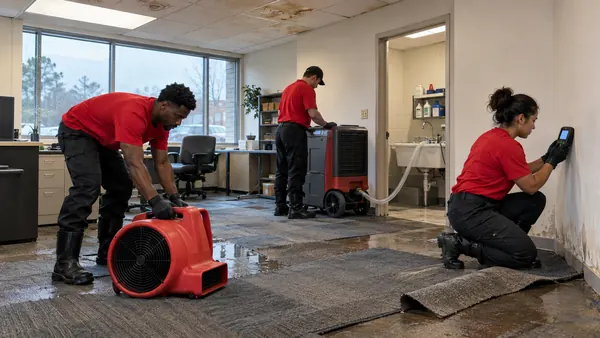
Commercial Storm Damage Dry-Out
Roof failures, clogged drains and burst lines flood suites in offices and shopping centers. We stage drying in phases to keep tenants working.
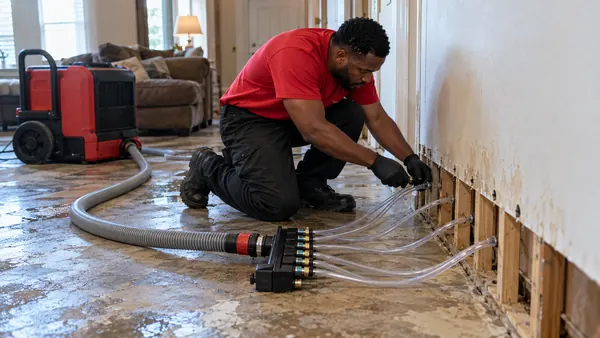
Structural Cavity & Drywall Dehumidification
Small access holes and sealed hoses move dry air through wet wall cavities, saving drywall, trim and finishes that would otherwise be torn out.
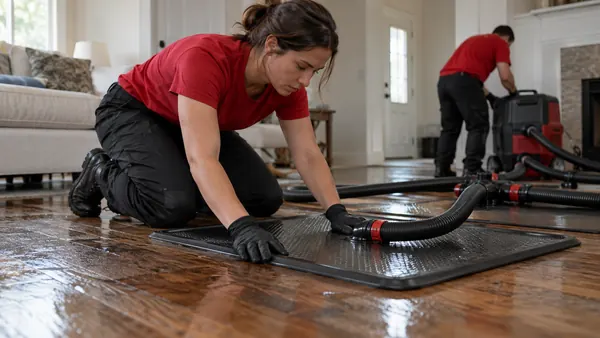
Hardwood Floor Advanced Drying Mat Systems
Vacuum mats and low-heat drying pull water out of tongue-and-groove hardwood quickly, so boards flatten instead of cupping and a replacement is avoided.
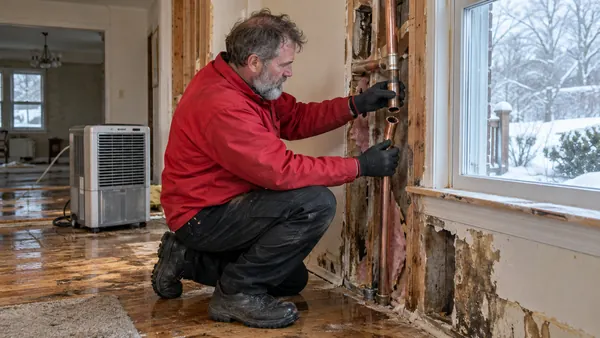
Frozen & Burst Pipe Cleanup
A freeze splits supply lines in attics, walls and crawl spaces, and water keeps running after the thaw. We extract, open and dry the structure.
The clay bowl
How a rainy week becomes a wet basement
Most of the ground in this area is Piedmont red clay. It is slow to take in water and slow to let it go, so a basement can stay dry in a downpour and then flood on day three. This is the sequence we see.
- Rain falls on the slope. Peachtree Corners is rolling ground. Water from higher streets and yards runs downhill onto lower lots.
- The clay fills up. After two or three days of steady rain, the soil beside the foundation cannot take any more.
- Pressure builds. Water in the soil pushes on the wall and floor joint. Cracks, cove joints and window wells let it in.
- The lowest level floods. The basement, the crawl space or the walk-out room is where the water ends up, often with no pipe failure at all.
How it goes
What happens after you call
Call and describe
Tell us where the water is, how far it spread and whether it is still running. We tell you what to shut off and what to leave alone.
Crew on site
We check for hazards, find where the water came from, then start pumping and pulling out wet materials that cannot be saved.
Dry to the numbers
Air movers and dehumidifiers go in. A tech returns to read moisture in walls, floors and framing until they match dry material.
Close out with records
You get photos, moisture logs and a written scope for your insurer, plus a list of what is ready for repair.
Water types
Three kinds of water, three kinds of job
The first thing we ask is where the water came from, because it decides the gear, the safety steps and what can be saved.
Clean water
Supply lines, faucets and tanks. It is the easiest to handle, and floors and drywall can often be dried instead of replaced if we start quickly.
Gray water
Washers, dishwashers and tub drains. It carries soap and dirt, so porous materials usually come out, and hard surfaces are cleaned as well as dried.
Black water
Sewage, toilet backups and floodwater from the ground. It carries bacteria, so we wear protective gear, contain the area and disinfect before drying starts.
Local
Water damage has local habits here
Red clay
It swells in rain and shrinks in dry spells. It holds water against foundations and drains slowly into crawl spaces.
Rolling lots
Runoff from higher streets arrives fast at the low lots, including those near the Chattahoochee side of the city.
1970s to 1990s homes
Established subdivisions have older sewer laterals, older stormwater systems and plenty of vented crawl spaces.
Humid summers
Drying is slower and mold starts sooner when the air outside is already damp.
Winter cold snaps
Georgia houses are not built for a hard freeze, and empty houses split pipes first.
Corporate and retail buildings
Technology park campuses, offices and shopping centers have large roofs and a few drains.
Where we work
Peachtree Corners and 15 nearby cities
Each area has its own soil, housing and storm habits, so each gets its own page. Find the one closest to you.
Gwinnett clay subdivisions
Slab ranches, vented crawl spaces and basements on dense upland clay.
DeKalb inner ring
Mid-century brick ranches, bungalows and split foyers on older foundations.
North Fulton estates and ravines
Walk-out basements, hillside lots and retaining walls.
Who we work for
Homes, rentals and commercial buildings
Homeowners call us for clay-seep basements, wet crawl spaces, burst pipes and failed sump pumps. Renters and landlords call for leaks between units and ceilings that drip from the apartment above. Property managers and business owners call for wet offices, retail suites and multi-tenant buildings.
The method is the same in all of them: stop the source, remove the water, dry the structure and write it down. What changes is the scale, the paperwork and who needs to be kept informed, so we shape each job to fit the building and the people in it.
Common problems
Problems we run into most
Every house is different, but the same trouble keeps coming back. Knowing it helps you describe the loss and plan the work.
Water in a basement with no pipe failure
Groundwater pushed through a cove joint or crack by saturated clay. A pump clears it. Drainage stops it from returning.
A damp, musty crawl space
Open vents and wet soil leave the joists wet. We clean the wood and tell you what is feeding it.
A leak that spread farther than it looks
A wet hallway often means a wet wall cavity and wet insulation behind it. We map it before cutting.
Mold that comes back
Cleaning the surface does not fix a wet cavity. We remove growth and dry the moisture behind it.
Burst pipes in attics and empty homes
Water follows framing down through floors, and an empty house can run a split line for days.
Hardwood that starts to cup
Wood swells from underneath. Fast drying mats can save a floor that a fan would ruin.
Cost
What water damage usually costs in Peachtree Corners, GA
A small clean-water leak caught early can cost a few hundred dollars to dry. A finished basement that took on groundwater can run several thousand. The number depends on the area, the depth, the type of water, how long it sat and what the floors and walls are made of.
These are typical estimates for the metro Atlanta area, not guaranteed prices. Plumbing repairs, drainage work and rebuilding are separate trades. Call for an exact quote.
What to do before the crew arrives
- Close the main water valve if the source is a pipe
- Keep out of water near outlets, the panel or appliances
- Move small items, rugs and boxes off wet floors
- Take photos and video of every wet room before anything moves
- Turn off the breaker to wet areas if you can reach it dry
- Keep children and pets away from the water
Drying
Why drying takes days, not hours
Pulling standing water off a floor is the quick part. The slow part is the moisture that soaked into wood, drywall, insulation and concrete. That water does not run out. It has to evaporate, and the air has to carry it away.
We set air movers to push dry air across wet surfaces and dehumidifiers to take the vapor out of the room. Then we measure. A meter reads the studs, the subfloor and the slab, and we compare the numbers to dry material in the same house.
Most homes need three to five days of equipment, and a humid week in July can add more. We come back every day, move the machines and remove the equipment only when the readings agree it is dry. That record is what your insurer and your contractor will ask to see.
FAQ
Questions people ask first
Do you answer the phone at night?
Yes. The emergency line is available 24/7, weekends and holidays included. Office hours are Monday to Friday, 8 AM to 7 PM.
Why does my basement flood after days of rain, not during the storm?
Clay holds rain and fills slowly. After a few days of steady rain the soil is saturated and pushes water through the wall. A short storm often cannot do that.
How long does drying take?
Most homes need three to five days of equipment. Concrete and dense framing can take longer, and we read the numbers daily to know.
Will my insurance pay for this?
It depends on your policy and on where the water came from. Sudden pipe failures are often covered, and groundwater and floodwater often are not. We document everything for your adjuster.
Do you serve places outside Peachtree Corners?
Yes. We cover Norcross, Duluth, Doraville, Dunwoody, Chamblee, Lilburn, Tucker, Alpharetta, Roswell, Sandy Springs, Suwanee, North Atlanta, North Druid Hills, Mountain Park and North Decatur.
Service area
Service area
We are based in Peachtree Corners, a service area business with no storefront. Crews drive to you. We work across Gwinnett, North Fulton and north DeKalb, and the emergency line routes to the nearest available crew.
If your town is not on the list, call anyway. We will tell you whether we can reach you in time to help.
Tools
Run the numbers before you call
Typical ranges and checklists built for clay-soil Georgia homes. None of them gives an exact price.
Blog
From the field notes
Your Sump Pump Failed: What to Do in the First Hour
The pump quit, the pit is full and the water is rising. Here is what we tell callers to do in order, and what to leave alone.
Who Handles Water Damage in a Rental: Tenants and Landlords
When water comes through a ceiling in a rental, everyone wonders who is supposed to call whom. Here is how it usually goes, without the legal fog.
How Georgia Homeowners Insurance Treats Water Damage
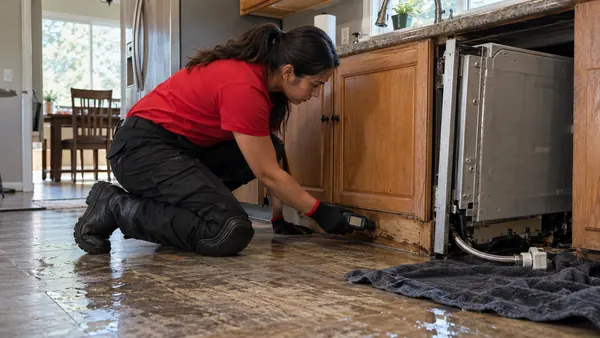
We are not insurance agents and cannot tell you what your policy covers. We can tell you what homeowners usually find when they read it, and how to keep a claim clean.
Water in the house right now?
Call the emergency line. If it is not an emergency, we answer weekdays 8 AM to 7 PM. (470) 291-8279.