Not legal advice
This is a practical guide from a drying crew that works in rentals every month. It is not legal advice. Your lease and Georgia law decide the details, and a landlord-tenant attorney or a tenant resource can answer questions we cannot.
What we can say is how these situations tend to go. A calm, quick, written process protects everyone. A slow one costs everyone money, and mold in a closed apartment is not good for anybody.
If you are a tenant
Report the leak in writing the moment you find it. A text or email works, with a photo. Use the method named in your lease, and keep a copy. If water is actively coming in, call the landlord or the management emergency number, and shut off the water at the fixture or the unit shutoff if you can reach it safely.
Move your belongings off wet floors and away from the stain. Take photos and video. Keep receipts for hotel stays or lost items, because your renters insurance may help. If you do not have renters insurance, a leak is a good time to learn what it would have covered.
If you are a landlord or manager
Georgia law generally expects a landlord to keep rental property in repair. That usually means responding to a leak promptly, stopping the source and getting the dry-out underway. The longer a wet unit sits, the bigger the repair and the bigger the dispute.
Call a plumber for the source and a drying crew for the water together. Give the crew access, tell the tenants what to expect and write down who was notified. If you carry a property policy, call the carrier early.
When the leak comes from another unit
In multi-unit buildings, the source is often in the unit above. A tub overflow, a washer hose or a water heater can wet ceilings and walls below. Both units may be affected, and each may have a different tenant, a different insurer and a different story.
We deal with this often. Our job is to read the moisture in every affected unit, dry them and send a clear record to the manager. We do not decide who is at fault. We document what is wet and when it dried, so people with the authority can sort out responsibility.
Sewage and black water in rentals
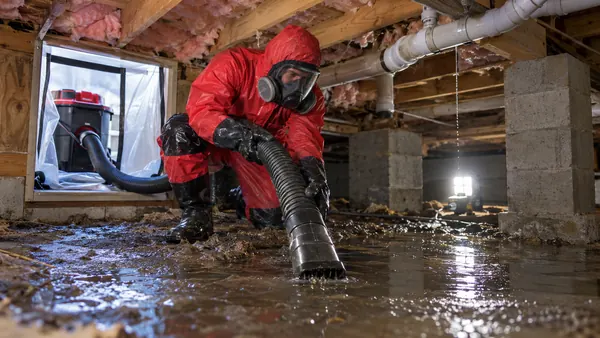
A sewer backup in a ground-floor unit is a health issue. Tenants should avoid the area, keep children and pets away and report it right away. The landlord should have it cleaned by a crew in protective gear, not a handyman with a mop.
Porous materials, such as carpet, pad and drywall, that touched sewage are removed. Hard surfaces are cleaned and disinfected. It can be a hard conversation about who pays, and having photos and a written scope makes it easier.
Access, schedules and equipment
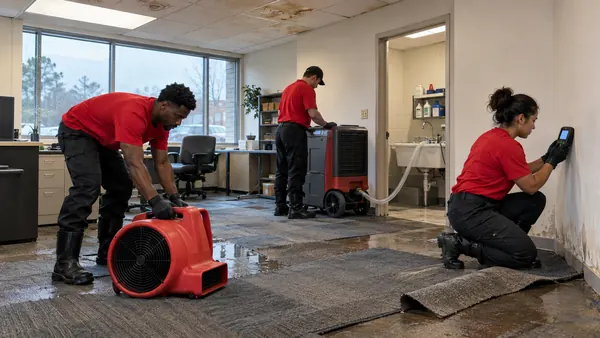
Drying equipment is loud and runs around the clock for several days. In an occupied unit, that is a big ask. Tell the tenant early, explain what the machines do and give a realistic timeline. A tenant who understands why the air movers cannot be turned off is more likely to leave them on.
Plan for access every day, because the crew returns to read moisture. Agree on times and a contact. If a tenant has to move out for a few days, put that in writing, with who is covering the cost.
Keeping a paper trail
Whatever side you are on, write things down. A date, a photo and a one-line message to the other party is worth more than a long phone call nobody remembers. When a dry-out is done, keep the moisture logs and the scope together with the lease and the repair invoices.
If the situation turns into a dispute about deposits, rent or repairs, that folder is what a mediator, an insurer or a court will want to see.
Mold in rentals
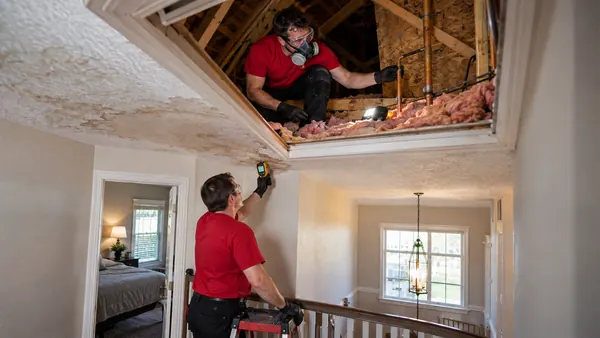
Mold in a rental is usually about moisture that was not found or fixed. A leaking vanity, a poorly vented bathroom, a damp closet on an exterior wall or a repeat leak from above are common sources. Tenants should report it early. Landlords should look for the water, not only the stain.
A moisture map is a neutral way to start. It shows where the damp is, whether it is current and what has to be dried. From there the repair path is clearer for everyone.
Quick answers
Who calls the drying crew in a rental?
Usually the landlord or property manager, after the tenant reports the leak. In an emergency, a tenant can call us and we will coordinate with management.
Does renters insurance cover water damage?
It often covers a tenant's belongings and temporary housing after a sudden leak. It does not cover the building. Read your policy.
Can a landlord enter to dry the unit?
Entry rules are in the lease and in Georgia law. A written notice and a clear schedule keep it smooth.
What if the leak is from the unit above?
Report it to the manager and keep photos. We can read moisture in every affected unit and send the record to the manager.